Thursday, March 11, 2021

Week Four (8th-12th March): Big and Hairy

Slightly shorter weeknotes this week, due to me having a shorter week at work, and also having already gone into some things in more detail earlier in the blog.

Monday

We had our first staff and volunteer consultation today, managing to gather six people with varying degrees of experience with CABmoney but lots of enthusiasm and ideas.  Thanks to everyone involved! Getting insights from the people who actually use CABmoney (either for themselves as an adviser, or assisting clients to sign in and enter their details) is invaluable.

First we went through the personas we already had for our clients, a range of six people who may need CABmoney (whether they knew it or not).  The one type of user persona missing was the "adviser" group.  If only I had a group of advisers at hand to help put some together.

Splitting into two groups, the team were able to define two new personas to cover different types of advisers who would use CABmoney under slightly different circumstances but still fit into our persona spectrums,

As it's quite a large part of these first few weeks, our work on personas and persona spectrums has been posted separately on the blog earlier today.

We then went through what ideas and thoughts people had about CABmoney.  As people were already bringing ideas, I left it a bit more informal which was good as it let people chat about and evolve the ideas more organically.  We still managed to get them all down and scored them for how much impact they would have on users (using a method that "kind of" worked, detailed here) and I'm going to do a more detailed breakdown of the ideas in a future blog post.

All in all, a great session, and thanks again to all who attended - I will no doubt be calling upon you again soon!

Tuesday

The first session was to start looking at a content strategy, with a number of personas to cater for and a lot of content on CABmoney, this will be a task for the zombie garden for now, and will definitely spill out onto a spreadsheet rather than a single slide!

Content by Visual Thinkery is licenced under CC-BY-ND

The second session focussed on finding our Minimal Lovable Product (MLP) by breaking down our "Big, Hairy, Audacious Goal" (BHAG) into more manageable chunks.  Breaking it down into smaller problems and plotting on a graph was very similar to work done in the discovery phase and I think that's where a few in our cohort (self included) veered more to identifying the solutions than the underlying problems.  It also meant the "big reveal" of showing the different quadrants of prioritisation was less of a revelation than it was intended!

BHAG by Visual Thinkery is licenced under CC-BY-ND

Wednesday

A bit of a catch-up day, with the personas and persona spectrums finalised (and now fully illustrated) along with the user journeys.  Felt better to get a few things ticked off the list and into the final playback slidedeck, but still a lot to do.

Thursday

Last day of the working week (for me), and with full intentions to work more on our Content Strategy, the phone didn't stop ringing (apart from when the email notifications were going off), so for now it stops in the zombie garden until at least next week.

The afternoon session was a recap of the BHAG into MLP exercise to make sure everybody had their problems defined, followed by "fast fives".  Again, this was a repeat of something we did in the discovery phase (only there were eight of them, not five!) and for my MLP (How might we improve the tutorials to make it easier for people to refer to and understand) seemed a little bit too narrow to find five solutions for (in five minutes), so some may have strayed into other aspects of the website.

They also didn't lend themselves very well to illustration outside of boxes and lines!


With a couple of days off to come, I'm just hoping the zombie garden isn't too overgrown when I get back!

Personas Assemble!

Personas are used in a project to identify different users, usually digging deep into who they are and what they want.  Once identified, they can be used to walk through different situations to ensure that their needs are met by the finished product or service.

Although started earlier in the project, we've only just managed to get all of our personas together to cover a range of users of CABmoney.  This was achieved by pooling the resources of a number of our advisers who know our client's needs as well as their own.

The full set of personas is available here with expanded profiles, but for the sake of clarity, I've shown a summary of our main eight below.


Although there are a number of differences between the personas, the main thing that connects them, is the level of involvement of both the end user (or client) and the adviser.  As we use CABmoney internally to help our advisers actually advise clients (and also for training purposes), the advisers are as much a "user" as our clients are.


We have split our personas into groups based on the amount of involvement of both the clients and the advisers, both of these increase and decrease for different circumstances (with a middle ground of 50:50 involvement from both).

Explorers

Some users will find CABmoney "out in the wild" either through search engines, links, or recommendations.  At the far end of our spectrum, these users will be able to get the information they need or be able to complete a Debt Management Plan (DMP) totally independently of us, and we would have no direct contact with them.  They will generally be more comfortable with technology and could be based anywhere in the country.

Assisted Users

Some "explorers" may get part way through the DMP and then require assistance, so they would contact us for help, therefore moving along the spectrum into the "assisted user" category.

The more common type of "assisted user" is somebody who access the Citizens Advice service through other means (telephone or pre-COVID face-to-face) and is assisted by an adviser to enter their details onto CABmoney and shown how to use it.  Some of these users may then be able to complete the process on their own, or may require further assistance as their circumstances change or if they struggle to work independently.

These users will always be local to our office and benefit from the support of an adviser as and when they need it.

Advisers

The third grouping on the spectrum are Advisers.  Some of our advisers use CABmoney as a tool for themselves to help them assist people.  As well as helping "assisted users", there will be some clients for whom it wouldn't be suitable to use CABmoney themselves.  This would be assessed by an adviser and is usually dependent on how comfortable they are with either technology or managing their own money.

In these cases, the adviser would still use CABmoney, entering the client's details and using it for calculations, producing letters, and keeping track of dates and finances, but the client themselves would have no involvement and likely not even know that CABmoney exists.

Summary

These three different groups highlight different needs and levels of support that would be needed when using CABmoney.  Depending on the level of involvement form both client and adviser, different features can be developed to help both whether working together or independently.

The user journeys below highlight how the experience of using CABmoney can be improved for all three groups on the persona spectrum.


Tuesday, March 9, 2021

Idea Prioritisation (Recipe - missing a few ingredients)

As part of the Catalyst project, we are encouraged to share "recipes", things we've built that can be shared with others who may be looking to solve the same problem.  I fully intended to do that with something I trialled for creating an automated "Idea Prioritisation Matrix", and while it wasn't a 100% success I think the process is still worth sharing and it may be something that can be refined in the future.

The Problem

The usual method for an Idea Prioritisation Matrix, is to let people put each idea on a sticky note (physically or digitally) and move them about the matrix depending on two criteria: the user value, and the feasibility (or effort).  Like this:


The problem I had, was that in the session I was running, I didn't know how many ideas were going to be generated (though I assumed it would be quite a few) and thought that a number of people moving that many sticky notes around would get a bit messy and cluttered.

Also, for the project in hand (the redevelopment of our CABmoney website) I thought that the "effort by organisation" part might be difficult for people to decide upon.  Without knowing what is easy or hard to develop for a website, this could have been skewed.

The Solution

Rather than attempting online sticky notes, I dropped back to a simpler method of scoring the ideas - Google Forms.  Most people are familiar with Google Forms, so I set up a fairly basic one with a question for each idea and a ranking of 1-10.

Because most of the ideas were being formulated during the session, I was able to easily duplicate the questions and add the new ideas in as we went, meaning that the form was populated as soon as we needed it.

I wanted to be able to visualise this in a way that Google Forms wasn't able to (the matrix), so I then linked up Google Data Studio.  After a bit of trial and error, it seemed that the data format directly from the form wasn't suitable for Data Studio, so I went back to the form responses spreadsheet to make some adjustments.

To save Google Data Studio having to do some of the "heavy lifting", I set up two new tabs in the form responses table to make it more manageable for Data Studio.

The first tab transposed the raw data, so that it was "long" rather than "wide".

In cell A1, I used the code

=transpose(Responses1!A1:AAN208)

which changed the data layout from this


to this


Then, in the other new tab, I set up cell B2 to again transpose the ideas with

=transpose(Responses1!B1:1)

Cell C2 as an average of the scores from the new "Transposed" tab. This formula would need to be manually copied down depending on how many ideas there were.

=average(Transposed!A2:2)

and an empty column for the "Ease of implementation" score that I would add manually once the results were in from the form.

The finished form (after the results were in) looked like this:


Over in Data Studio, I added this worksheet as a data source. I knew that I wanted the results to be displayed with the axes going through the center of the matrix, so as these were scores out of ten I simply added two new calculated fields that subtracted five from each score, so that the score range was now -5 to +5.


Plotting these new fields on a scatter graph would automatically create the matrix as soon as the Google Forms were filled in, this seemed much easier than getting people to move multiple sticky notes around.

For the visual effect, I added the image below (created by me, free to use) behind the graph so that the plotted points would fall into the various coloured bands.  The image below is rectangular as that was the shape of the matrix, but it can be stretched to fit any other dimensions if needed.


Did it work?

Technically, yes.

Though not quite as well as I'd have liked.


One issue was that in asking everyone to score the ideas out of ten, most people thought most of the ideas were good, so there was a bottleneck of ideas up in the top half of the matrix.  Nothing had scored lower than 6.4 for impact (or 1.4 on the adjusted matrix with minus 5 applied).

I was able to remedy this by changing the Y-axis so that it started at 0 instead of -5, which effectively stretched the results out from top to bottom.


Also, for the sake of clarity, I removed the data labels from the matrix as there was so much overlap of text.  Within Data Studio this works well, as the points can be hovered over to view the text but if exported elsewhere would need a key (the labels could be numbered ideas with a key to show what they are).


What could be done differently?

Ranking the ideas rather than scoring would give a better spread of results.  I had thought of that before asking people for scores, but Google Forms doesn't have a ranking option.  A few other online surveys did have the option in their paid for tiers.  Ideally an option to drag the ideas into place would make it easier for people.

With 21 ideas it's still preferable to moving all of the sticky notes in the session, which is a problem when taking the ideas from a group of people and then taking the votes.  If this was a finite number of ideas before the session, there would be more control over the voting but I wanted something more dynamic for the session.

Friday, March 5, 2021

Week Three (1st-5th March): Ignore the Jargon

Monday

The start of a new month and the slew of jobs that come with it (usually revolving around monthly reporting) meant Monday was a day for getting on with "the day job" so there was more time clear later in the week for Catalyst work.

Tuesday

Thankfully, the Tuesday WAO session was partially set aside for catching up a little and checking where everyone was at.  We were able to get a better handle on personas and feel a bit more "caught up" now after missing this in our Discovery Phase.

Following that we looked at Systems Ecosystems, using a very busy Miro board with many post-it notes, arrows and cursors flying about from all of the charities in our cohort.  Being able to show what we use and what we use them for highlights a few duplicates we already knew about (due to different pieces of software sometimes being better suited to different tasks or users) but always worth keeping tabs on this sort of thing so as not to reinvent the wheel (or not using three different programs to reinvent it!)

Wednesday

I think our Systems Ecosystem is finished, even if at times it feels a little like this:


But really, it's more like this:

Mapping Out Our System Ecosystem by Visual Thinkery is licenced under CC-BY-ND

Ours is certainly making full use of coloured arrows and post it notes.

On a side note, our trial of Trello has gone down well with our team of Social Media advisers, so we already have one "quick win" from the Catalyst Project that we've been able to put into action within the first three weeks.  This doesn't tie directly into the redevelopment of CABmoney, but just goes to show where the tools and methodologies can be used elsewhere across our organisation.

Thursday

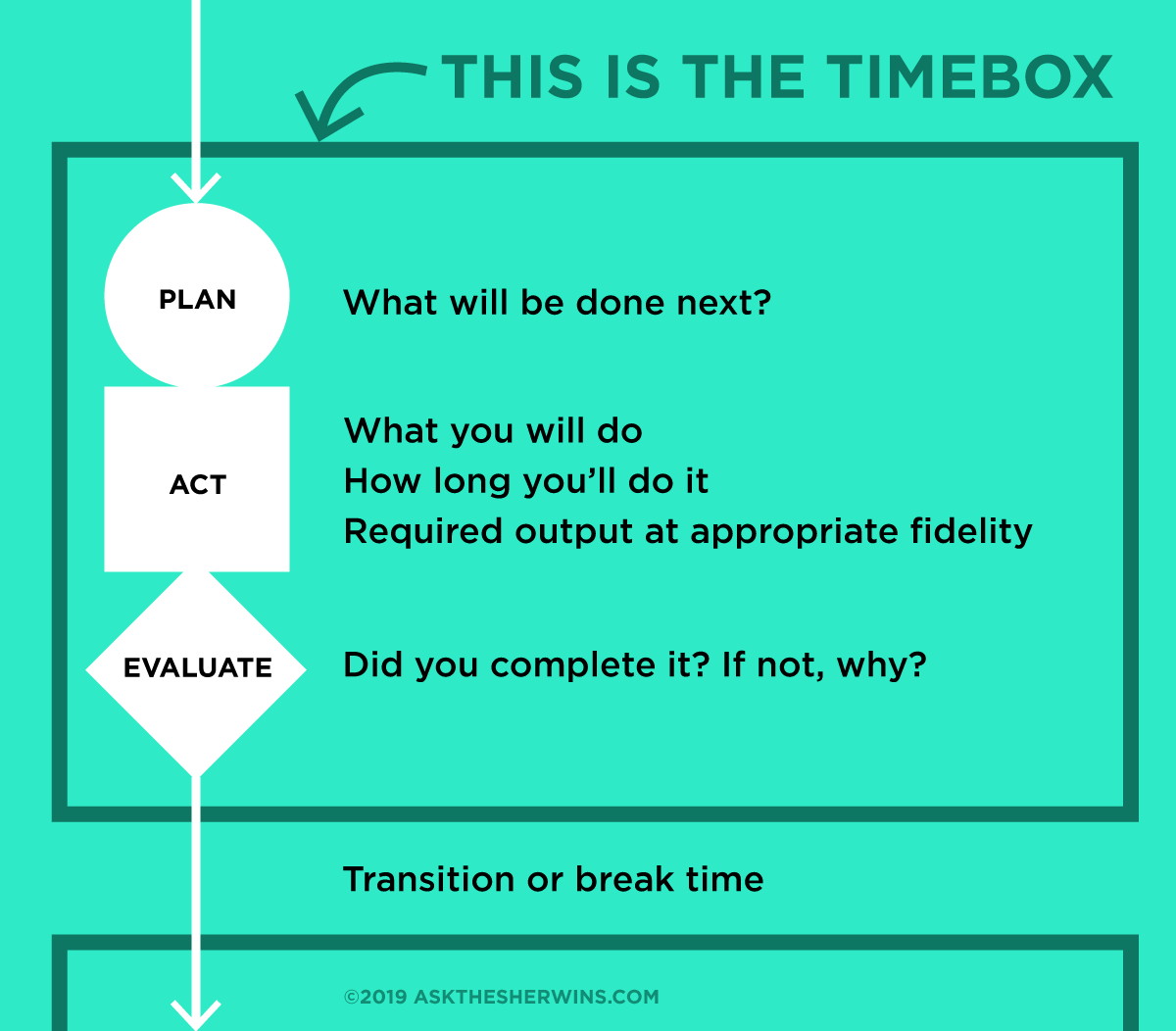
Thursday's tech session was all about Agile Development, a phrase I'd heard bandied around before when Citizens Advice built their latest database system.  I hadn't quite got a handle on it (only a rough idea), but now I have a list of new buzzwords to use the next time I do a standup before breaking an epic into timeboxed sprints.

Then we talked about not alienating people with jargon, so maybe just ignore that last sentence!

Into Office Hours shortly afterwards, to get a bit more confirmation over those troublesome personas.  I think we're nearly there and with a couple more to add next week, they should be ready to share on the blog next week.

Friday

The end of another busy week!  Finalised the slides for our internal consultation on CABmoney (more on that next week) and sorted out a running order for it (hopefully I'm overestimating the time at two hours).  Fingers crossed the tech (including my internet connection) holds up as I've set up a Google Form that links to Google Data Studio to "hopefully" create a live Ideas Prioritisation map.

If it all works, I'll share how I put it together on the blog next week.

If it doesn't, we'll be back to pen and paper!

Friday, February 26, 2021

Week Two (22nd-26th February): Hot Mugs and Zombie Gardens

Monday

Started the week by finalising a date for our internal consultation about the CABmoney website.  We've managed to get together a selection of advisers with a good range of experience using the site and their input will be valuable.  Amazingly, there was a time slot that everybody could make so we're just two weeks away from putting some of the methods learnt in our discovery phase in practice to "rediscover" against our new focus.

Tuesday

Zombie Garden by Visual Thinkery is licenced under CC-BY-ND

Other than sounding like a Netflix TV series that I would definitely binge watch, Zombie Gadens are effectively a way to put ideas to one side until a better time.  Something we'll definitely be utilising!

The rest of Tuesday's session focussed on personas and persona spectrums.  Unfortunately, we didn't cover personas during our Discovery phase, so felt a little left behind.  Fortunately, the team at We Are Open (WAO) covered this by splitting the cohort into two groups to catch us up.  Being honest, it was the first time in the project that it felt like things were slipping as we were at a bit of a disadvantage due to different groups running the Discovery phase differently.  It's certainly salvageable though, with video guides offered by WAO and the open invite to Office Hours most likely being useful to us going forward.

We also started working on our Architecture of Participation, to lay out how people in our organisation can get involved and where they can find information about the project.  With the consultation group already set up, and this blog already available we have a good head start on this and we can continue promoting the work through our internal newsletters and meetings.

The work from Tuesday is all very much a work in progress, with the personas and architecture of participation working documents with a lot of refining to do.  They'll all be up on this blog when we're happier with them, but we are moving forward.  Back at the "office" (virtually) I asked some colleagues to put together some personas for our clients, and we will be looking at covering other user groups soon with people.  Not quite in the Zombie Garden, but at least on the borders!

Thursday

With a bit of a clash of sessions today, WAO swapped around the tech session and the office hours, so a few members of the cohort were able to attend "Designing Human Connection in Digital Services with Deepr".

A number of people didn't get the memo about bringing a hot drink, so didn't get involved with holding onto a hot mug and looking at everyone else in the meeting to create a sense of warmth!

There were a LOT of ideas in this 90 minutes, most of which I need time to digest and look through again.  While I can see the reasons behind a lot of them under the right circumstances, a number of charities were quick to dismiss "showing your room" or "lighting a candle" due to either a risk of confidentiality or burning the house down!

I did pick out a few ideas though that could be applied to the new CABmoney, particularly Lo-fi Hi and Mirroring which I think we can utilise to make a better human connection with people using the site.

That was soon followed by the WAO "Tech Session", much like last week's tech session there were a few things we already knew about as ways to acquire software and new technology but also a few others that sound like being well worth a look through.  

Lots more to go through, so for now, they're in the Zombie Garden (just beside the tomato plants) but definitely useful resources.

Friday

Onto Friday, and it's blog writing (which if you're reading this was a success), another tweak of our personas (now with added wonky drawings) and an outline plan for the staff consultation session which is now just over a week away - how time flies!

Friday, February 19, 2021

Week One (15th-19th February): Definition


A whirlwind week of workshops, meetings, breakout rooms, icebreakers and notes.  Lots and lots of notes.

I was only briefly involved in our Discovery phase but now found myself fully immersed in the Definition phase after a change of tact (see our previous blog posts) and a better focus (hopefully!) on exactly what we were looking to achieve from this project.

Tuesday

The first port of call was a workshop on "Working in the Open" (which sounds like it would be much too cold to do in a frost-tinged February) but covered ways of sharing our work throughout this project.  One form of sharing our workings and process was to post to a blog, so if you're reading this now it's a proven method!

Tuesday afternoon moved to the first session with We Are Open for the Kickoff workshop and a chance to meet the other organisations in our cohort.  More icebreakers and introductions, a short break and then into getting something down on paper (or on screen), Stakeholder Mapping.

Stakeholder Maps by Visual Thinkery is licenced under CC-BY-ND

Plotting various stakeholders along two axes (one for "interested" they are in a project, and one for how "involved" they are) helps show how these various groups should be dealt with through the project's life.

Adding a few extra stakeholders that fit into our project I was able to fairly quickly create a map thanks to the techniques used in the session.  The first bit of "homework" done!

Wednesday

No sessions today, but I realised we needed to think more about our project, especially with us changing focus relatively late on.  Our Discovery phase was still important, but with moving away from looking at video advice and onto redeveloping our CABmoney website, I felt we needed to re-Discover.

Fortunately, we had a staff meeting planned for the afternoon, so I was able to secure a spot to talk to people about the project.  Still formulating what it is we need, I explained why we were doing this and that I'd like to get a group together to do a consultation on what people want CABmoney to actually be.  One positive response from a colleague before the end of the day, made it seem all worthwhile!

Thursday

The afternoon session covered "Audience Analysis".  Well presented, but having worked with our websites for some years I was already familiar with Google Analytics and I just discovered Google Data Studio a month ago.  We don't have a "Data Model" though... hmm, one more for the list!

Session over and if nothing else, I learnt how difficult it is to come up with a three word "how are you feeling" at short notice!

I spent the remainder of the afternoon starting this blog and going back through our client consultation data now that we had a few extra month's worth to pore over.  A few extra thoughts on how and where we can gather data for CABmoney, but that can wait until Friday.

Friday

Using our Google Analytics stats plus information from the CABmoney database, I was able to put together some more data and post up in the blog about what CABmoney is, and the first steps into looking at what we need to do with it.

To get further data, I added a Google Form survey to CABmoney and posted about it on our social media channels. Hopefully, we get enough engagement to discover some more about user experience with the website that will help us get a clearer course of action.

Week one is over, and in some ways it feels like starting over from scratch but at least we have a plan!

What is CABmoney?

In our first blog post, we talked about how our initial thoughts had changed from finding different ways to offer advice and had we were now looking at how we can best revitalise our CABmoney website.

But what is CABmoney?

CABmoney is a debt advice information guide and resource developed and maintained by Citizens Advice North East Derbyshire.

The content was developed by utilising the many years of experience and knowledge of our debt team, other bureau advisers and external advice specialists.  The coding of the website was all written in-house by the bureau I.T co-ordinator.

CABmoney incorporates a unique online assisted self-help Debt Management Plan (DMP) that automatically generates letters / financial statements, does calculations and is all saved securely online. You can access and update your personal Debt Management Plan whenever you want and you are in control.

Based on an established, award winning system

Citizens Advice North East Derbyshire launched the "mymoney" debt resource in January 2012 and were awarded the IMA Money Advice Performance Award for Best New Initiative shortly afterwards.  The site has evolved since (including input from Citizens Advice Specialist Support), and "mymoney" has become "CABmoney" as we have made it available to all local offices in England and Wales.

As more local offices use CABmoney, it will continue improving through their feedback and we always look forward to hearing about innovative uses of the system. It has already been used to secure funding to launch new projects, giving more people free access across their community.

Why might it need changing?

CABmoney's current form was written in 2014, which in website terms is extremely old!  Technology has moved on so much in that time that there are better ways of doing things.  Back then, designing for mobile devices was less important and so CABmoney today can seem "fiddly" on a smaller screen.

We designed CABmoney with both our clients and our advisers in mind, what we don't know is whether this resulted in a website with "too much information", or was too "technical".  Do we need more information, or less?  Can it be streamlined and made easier for those who used it independently without ever contacting us directly for advice?

These are the questions that we will try to answer through this current stage.

CABmoney by the numbers

We are able to ascertain a lot of information about the current usage of CABmoney, both from Google Analytics and its own "back end" database.

Even though we are a regional Citizens Advice office (covering the Local Authorities of North East Derbyshire and Bolsover) CABmoney has been used all over the country. We can see this on Google Analytics (though this isn't an exact science due to how the location of a user is collected).


Also in Google Analytics, we can see that device usage has changed over the last seven years.  As a percentage, desktop computer usage is declining and mobile phone usage is increasing.  Surprisingly, tablet use is also in decline, meaning that the current trend is for more people to be using their mobile phones than more traditional larger screens.


In the CABmoney database, we can see more details on how people use the Debt Management Plan (DMP) area of the website.  This is the only part that somebody would need to set up a (free) account to use as it stores budgeting and debt details in order to generate budget plans and letters to help deal with their debts.

As of February 2021, just under 10,000 people have signed into CABmoney.  As these will only be the people signing up to use the DMP it is only a fraction of total users, but it is a good indication of engagement.

The rate of users signing up to use the DMP, has increased over time with a noticeable increase across 2020 (though the largest spike was in November 2019).  This shows that there is more demand than ever for people to manage their debts with an online system such as CABmoney.


Do new signed in users actually equate to more people completing the Debt Management Plan?

In order to allow people to pick up where they left off, the system tracks how far through the DMP they have progressed.  In analysing this, we can see that a high percentage of people (78%) sign up for an account but then go no further.


This is an important area to look at, as we cannot say why people are signing up for an account but then seemingly not using it.

Whether it is because they are signing up when they don't need to, or once they sign up they are having difficulties in using the system we will need to make the user journey as straightforward as possible. 

Our following research and consultations will focus on these areas as we aim to improve CABmoney, not just technically in the coding, but more importantly the user interfaces and clarity of information for users.

Update (24/02/2021): We have removed a number of obvious "bot" accounts from these graphs, though there may be many more.  This would at least partially explain the number of people signing up for an account but not using the resources.